
我们相爱吧
狂砸37万催生!新加坡生育率新低 这些地区同样偏低_我的网站

A | 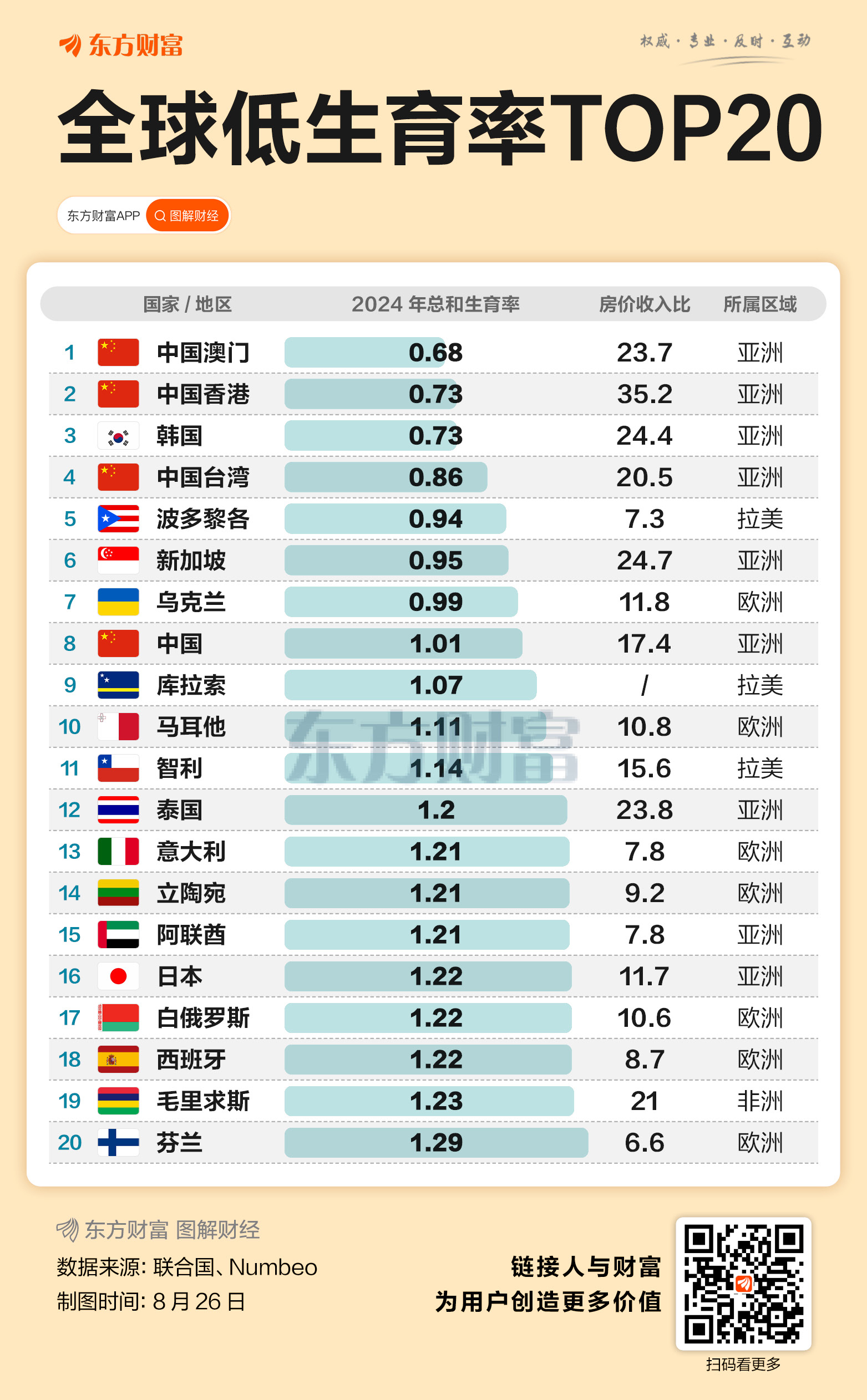 低生育率已经成为全球多地面临的核心难题。

While delivering a speech at the Stratbase Institute in Manila, Philippines, on Monday, Colby, the Under Secretary of War for Policy, laid out the US' so-called "flexible realism" approach to the Indo-Pacific, stressing that the US is "definitely not disengaging from Asia" but strengthening its forward posture and seeking to build a "denial defense" along the First Island Chain, according to a transcript of the speech released on the US Department of War website.
At the same time, he called on US allies and partners to step up, invest more in their own defense, and take responsibility for their own sovereign security. "We are looking for partners, not protectorates," Colby claimed.
The claims have drawn attention from some Philippine media outlets, with some linking them to the South China Sea issue. However, the transcript of Colby's speech showed that he did not mention China, the Global Times found.
A Manila Bulletin report noted that after calling on allies to invest more in defense, Colby cited the Philippines as an example of the "kind of partner Washington wants to work with." He praised Manila for "strengthening its military and coast guard capabilities while deepening operational cooperation with the US" amid what the report described as China's "aggression" in the South China Sea.
Colby's visit to Manila marked his first official trip to Southeast Asia as an undersecretary under the Trump administration. He is scheduled to travel from Manila to Jakarta, Indonesia; Bangkok, Thailand; and Phnom Penh, Cambodia, said the report.
Meanwhile, a Manila Standard report interpreted Colby's remarks as showing that "the US is working closely with the Philippines" to strengthen Manila's military capabilities and protect its sovereign rights in the South China Sea, despite the fact that Colby did not mention China in his speech.
The US appears to be adopting a more retrenchment-style approach, shifting from leading directly to relying on regional allies to take the frontline role while providing support. This approach allows Washington to advance its interests while lowering its own costs, Song Zhongping, a Chinese military affairs expert, told the Global Times.
Song noted that Washington seeks to use repeated maritime frictions to tie down Chinese resources, which helps explain Colby's praise for Manila: the Philippines bears part of Washington's strategic burden while receiving largely rhetorical US support.
A South China Morning Post report on Tuesday noted that Colby avoided mentioning the recent disputes over Huangyan Dao, despite Washington having criticized China's establishment of a nature reserve there just two days earlier. The report described the omission as a "measured tone" ahead of a potential meeting between the Chinese and US leaders.
Washington's primary concern is its own interests. At the core of its "Indo-Pacific strategy" is strengthening its alliance network by pushing partners such as the Philippines to shoulder greater security burdens in pursuit of US strategic goals. As US-China diplomatic dynamics evolve, countries serving as Washington's geopolitical spearheads in confrontations with China risk being left behind, said some observers.
Song noted that this also reveals the fragility of the US-Philippine relationship.
The US has encouraged the Philippines to take the front line in confrontations with China while offering mostly rhetorical support. Should tensions escalate, Manila would bear much of the cost on its own, said the expert.
。近日,新加坡总理兼财政部长黄循财宣布了新的“SG养儿育女配套”,包括增加在职家长的育儿假,以及让每个新加坡公民从出生至17岁获得近7万新元(约37万元)的政府财务补助。 具体补贴方案包括:孩子出生后12个月内发放1万新元,儿童教育账户初始津贴5000新元、家长在儿童教育账户储蓄可获最高5000新元;1—16岁期间每年2000新元;满17岁时教育账户可获1万新元。叠加原有的两项政府补贴约7500新元,全部育儿补贴福利合计口径约6.95万新元。 不断上涨的房价给年轻家庭带来压力,使得新加坡结婚和生育的难度进一步提升。

B | 新加坡移民与关卡局公布的数据显示,2025年新加坡出生人口为29864人,同比减少11.4%,自建国以来首次跌破3万大关。总和生育率从上一年的0.95进一步跌至该年的0.87,已属于全球最低行列。 总和生育率是衡量人口生育水平的核心指标,指假设一批妇女按当前年龄别生育率度过整个育龄期且无一死亡,每人平均生育的子女数。国际上以2.1为“世代更替水平”,即平均每对夫妇需生育2.1个孩子才能维持人口总量稳定;1.5左右则被视为“高度敏感警戒线”,一旦跌破便有跌入“低生育率陷阱”的可能。

C | 新加坡的困境并非孤例,环顾全球生育率最低的一批经济体,高房价几乎是共同底色。据Numbeo2026年中数据,新加坡房价收入比达24.7,即个人不吃不喝近25年才能买下一套90平方米公寓;中国香港高达35.2、韩国 24.4、泰国23.8,中国澳门23.7。住房成本像一道无形的门槛,将婚育计划一再推迟。 不过,房价也并非是压制生育意愿的唯一变量。

D | 低生育率经济体的共性困境还包括:教育投入的“军备竞赛”使育儿边际成本飙升;长工时与轮班制度侵蚀家庭时间;托育服务供给不足,双职工家庭“生得起、没人带”;“养儿防老”观念弱化,生育的工具性价值下降等多重因素。 由此观之,新加坡近7万新元的育儿配套,方向自然是值得肯定,但现金补贴能否对冲住房、教育、职场等多重压力,仍有待观察。国际经验表明,生育率一旦跌破1.5,单一政策工具往往收效甚微,唯有在住房、托育、教育、工作方式等多方面的系统性改革协同发力,才有可能走出“低生育率陷阱”。 (文章来源:东方财富研究中心)。
Current article:http://4p0l8j.linlangdouwaqiexusan.bond/list_t8pin/6yyl.html
Published on:17:00:01


